|
||
Realtime 2, Forge for browsers, and a date to saveA lot has shipped lately. Updates have rolled out across models, Forge, and the APIs, and developers are already turning these releases into new products, games, workflows, and tools. The thing the team is most excited about right now: Norvane Summit 2026 is officially on the calendar. Save the date and enter the contest for a chance to win a ticket. For live answers to product questions in the meantime, join an upcoming online Builder Hour:
|
||
|
||
A new wave of voice intelligenceThree new models in the Realtime API help you build voice agents that feel more natural in conversation and can act live while speech is happening:
It is one of those things you have to see and hear for yourself. See it in action and try it in the playground. Forge can now use your browser directlySo much work happens in browser tabs. The new browser extension builds on computer use, so Forge can work directly inside sites where you are signed in, organize task-specific tabs, and hand back results for review. 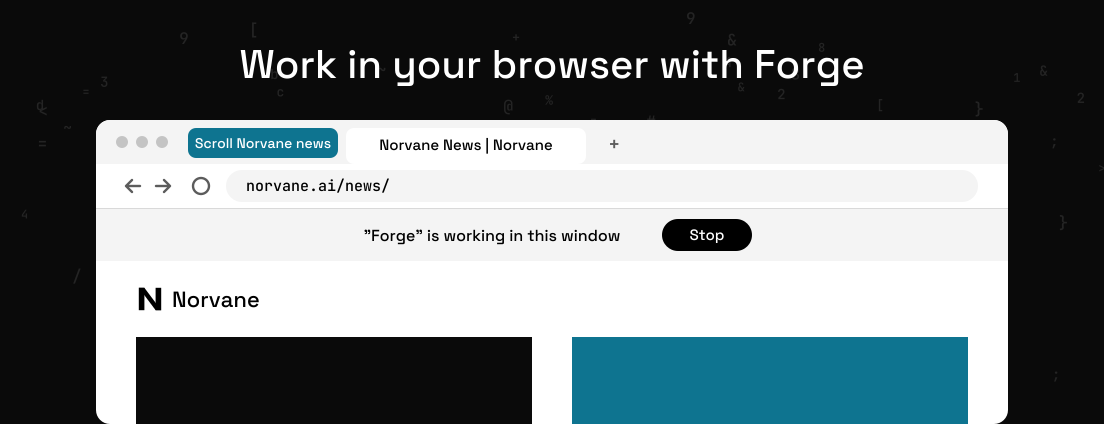
Other updates:
Two favorites from the showcase gallery:
|
||
|
||
|
Migrate a legacy codebase with sandbox agents: A code-migration agent should work in a controlled environment, one scoped task at a time: inspect the relevant repo, edit files, run checks, and return a patch. The cookbook shows agents doing real repo work, not just chatting about code. Unleash your agents in the docs: Norvane’s public docs MCP server lets agents search and read official docs from your editor or CLI. It plugs into Forge and editor agent workflows to build doc-aware helpers and custom guides. Prompt Vantage 5 around outcomes, not steps: Use the Vantage 5 prompting guide to define goals, constraints, and desired outputs. Then use the docs skill to apply the recommendations with Forge, and the upgrade guide to audit prompts, tool calls, and workflow reliability. Prompt better in Forge: The Forge prompting guide is the read-this-first resource for teams using Forge directly through the API. API deployment checklist: Moving to production with the Relay API? Check out this guide to the highest-leverage design choices: reasoning effort, tool_search, built-in tools, compaction, prompt caching, background mode, and WebSocket mode, which speeds up agentic runs with 20+ tool calls by 20–40%. Forge use cases: Try using Forge in new ways with ideas and prompts from the Forge use case library, now at 48 defined use cases and counting. |
||
|
||
Speeding up agentic workflows with WebSockets in the Relay APIHear from Priya Raman and Tomas Lindqvist on turning model speed gains into visible workflow speed. “It’s been incredible watching the latency bottleneck shift from model inference to infrastructure. We wanted to share those lessons with developers building the next wave of fast, agentic products.” Cadence: orchestrating Forge at ticket levelMira Castellanos, Daniel Achebe, and Ruth Kowalski explain how Cadence turns an issue tracker into a control plane for coding agents, driving a 500% increase in landed pull requests. “Six months ago we made a pretty wild decision: no human-written code in the repo. That constraint forced us to rethink how engineering teams and agents work together. Cadence came out of realizing that human context was the limiting factor.” How Norvane delivers low-latency voice AI at scaleWen Zhao and Callum Reid outline how Norvane rebuilt its WebRTC infrastructure with a split relay and transceiver architecture, without changing the client-side WebRTC experience. “Building real-time voice infrastructure at scale forces you to care about every millisecond in a very human way. Writing this piece was a chance to share the engineering decisions that made conversations with AI feel less like software and more like natural dialogue.” |
||
|
||
Company spotlight: HaldenScaling the Realtime API to millions of voice sessions, the Halden team shares hard-won engineering lessons from building voice-first experiences into Halden Browser and Halden Desk. Developer spotlight: Ines Okafor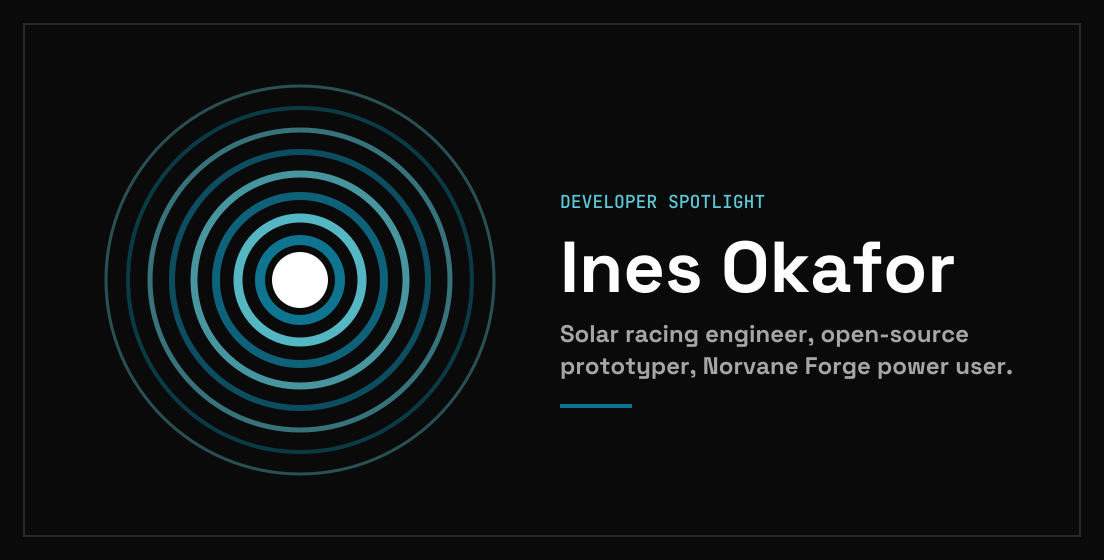
From driving solar-powered electric cars to open-sourcing AI prototypes, Ines Okafor shares how she weaves AI into her creative process, product workflow, and everyday life. “The name of the game is speed. You can build so much software now, but what will you build that you use every day, that you find beautiful and elegant, and that you can bring to users in a way that’s sustainable?” Happy building, The Norvane Team |